What happens if you’re kidnapped and no one can pay the ransom?

While the EU continues to turn a blind eye to the brutal trafficking of black migrants in Libya, those who’ve reached safety are now stepping in to help others.
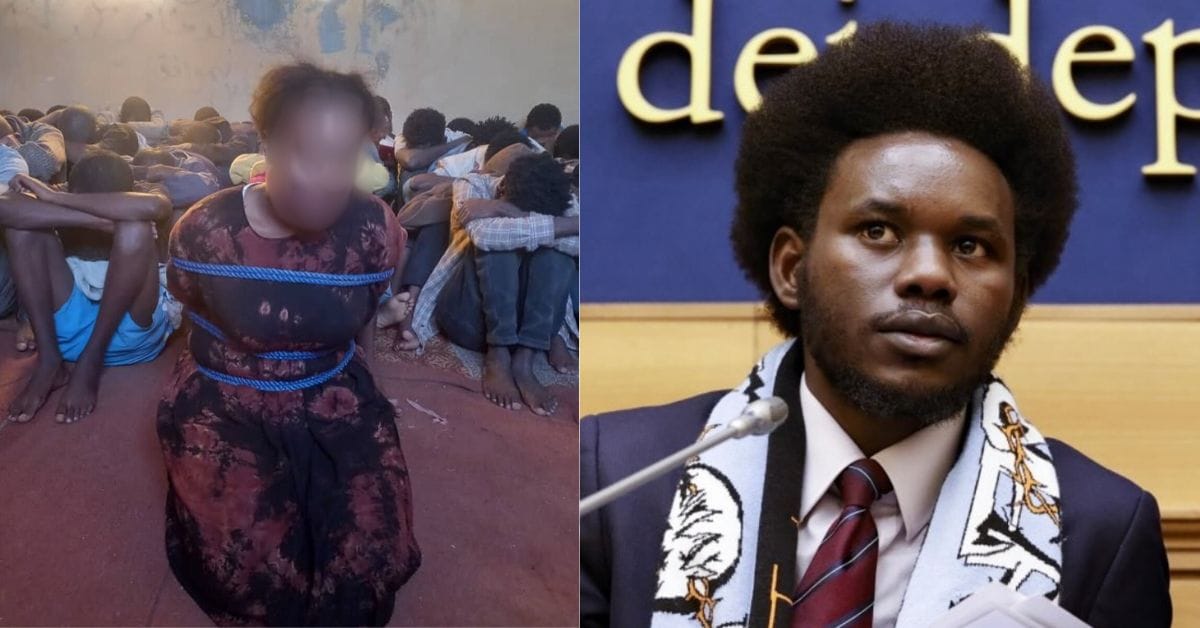
A torture video of an Ethiopian woman bound, gagged and beaten was widely shared on social media, earlier this year. Naima Jamal was fleeing one of her country’s brutal, forced, military camps when she was tricked by brokers promising her freedom. Instead they trafficked her through the desert to Libya.
It was there, held in a human trafficking warehouse, that the 20 year-old's physical abuse began. Videos were filmed by her captors, demanding a ransom for her release. With each distressing image that Naima’s mother received, the cost of her daughter’s freedom increased. The price eventually arriving at $6000 (around £4500). A price Naima’s family were unable to pay.
Refugees in Libya
Instead, Naima Jamal’s extortion videos were forwarded to Refugees in Libya, a grass-roots charity whose members were themselves once kidnapping and torture victims in Northern Africa. It took their co-founder, David Yambio, five cycles of being captured, detained and exploited before he managed to escape Libya’s notorious Mitiga prison. He finally reached Europe by migrant boat in 2022.
Yambio had fled his home country of South Sudan after being forcibly recruited as a child soldier for the LRA in 2009, and later, conscripted by the government forces there, following the civil war. Granted asylum in Italy, Yambio now works tirelessly for other African refugees who are yet to reach safety.
Cry for help
Central to Refugees in Libya’s homepage is a cry for help form for migrants, and cry they do, in videos sent to the charity’s Whatsapp account: trafficked women who have been raped and battered- begging for mercy, groups of dead and dying black African men starved and abandoned in the Algerian desert, others displaying backs riddled with bullet holes after they were hunted by locals in Tunisia. A recent post shared on their Instagram account shows a devastatingly, voyeuristic, video of a young man trying to stay afloat besides a sinking vessel, surrounded by screaming, fellow migrants. He's using his only free arm to hold up his phone so we can witness it.
And it’s these images and messages that are sent to David Yambio's mobile. He estimates he receives about 75-90 cases a day from refugees and migrants, from all over Northern Africa. They're reporting anything from housing problems, to torture, to murder. Understandably, a decision has now been made to share out these desperate messages amongst a European alliance of volunteers who collectively deal with approx. 120 calls for help a day.
Yambio’s direct method of communication is also what saw the 27 year-old forge a connection with the late Pope Francis. The Supreme Pontiff called him personally, late in 2021, while Yambio was still in Tripoli. The call arrived while Yambio was staging a 3-month long protest in front of Libya's UNCHR Community Day Centre.
Defying the Libyan government and risking their lives, hundreds, and then thousands, of trapped African migrants remained in the streets demanding safe evacuation from the country, fair treatment for refugees and justice for all those who had been arbitrarily detained or murdered by the government's coalition of security forces and militia.
The momentum to do so had come from the violent raids carried out on the refugee community in Tripoli's Gargaresh area. Over 5000 migrants, including women and children, were snatched from their homes and make-shift shelters, rounded up, and sent to inhumane detention centres such as Al-Mabani and Shara' al-Zawiya. Amnesty International reports that at least one person was murdered in the attack.
Those that weren't taken mobilised themselves to protest, with David Yambio's phone being central to the movement's organisation. As the groups's activism grew, it was there in the streets of Tripoli, that Refugees in Libya was formed. Although, Yambio says that when Pope Francis called -offering the group his words of support- Yambio had no idea then if he'd live to see the next day.
Thankfully, he did and once settled in Italy, Yambio and his team were called to meet the Pope in person. Refugees in Libya also received an official invite to the late Pope Francis' funeral.
Targeted by spyware
It’s probably not surprising then that Yambio's mobile has been targeted by spyware. Digital survelliance researchers discovered his device had been intercepted using hacking software while he was providing the International Criminal Court with evidence on human rights abuses against migrants. David Yambio was among a number of activists and journalists in Italy who’s phones were spied on. Yambio worries this direct attack on his work could jeopardise the safety of those still being held in Libya.
Tens of thousands African migrants in Libya
The sheer scale of migrants arbitrarily detained, sexually abused and exploited in Libya is still unknown. Around 20 men were pictured gagged and kneeling behind Naima Jamal in her ransom photo, their identities unknown. Amnesty International say there are tens of thousands African migrants and refugees still trapped in the country, experiencing abuse.
The EU's culpability
But Black migrant torture has become a commodity for Libya’s militias- and business is booming. Yet the EU couldn’t give a monkey’s, lending their support to Italy and its Memorandum of Understanding with Libya. The rolling contract- already on its third renewal- helps fund and train the Libyan Coast Guard to intercept migrant boats crossing the med. This is all done while wilfully ignoring that the refugees captured are then held in Libya’s shadowy detention network.
Many who support Italian PM, Giorgia Meloni, lauded the initiative's success, Italy recorded 41,617 migrant arrivals in 2024, down from 133,098 the previous year. Although, the cheerleaders are considerably quieter on the subject now, since migrant arrivals have surged again by 40% so far this year.
Meloni's- tight smile, dead eyes- solution, offered to critics of her migrant policy, is to champion a 3-year migration plan that would offer 450,000 refugees legal access to the country: many of whom would then be obliged to work in Italy's ailing labour market - a system that's already riddled with it's own human rights complaints regarding migrants.
Italy may have granted David Yambio asylum status, but for many others trapped in Libya- living the cycle of abuse he once faced- their hopes of reaching mainland Europe remain fragile. And despite Meloni's proposed, humane, migration corridor, nothing quite shows Italy’s brazen support for Libya's brutal detention methods than having their secret service, personally, release suspected Libyan war criminal, Almasri- Osama Najim.
The country's now infamous public disregard for international law saw the head of Libya’s judicial police, who's wanted for rape, murder, and torture charges, (whilst in charge of the prison David Yambio was held in), arrested in Turin after a tip-off from Interpol.
Yet, Italian authorities, shrugging their shoulders as they blamed poor paper work, granted Almasri's free passage to escape justice and return to Libya. They even gave him a lift home.
Freed from captivity
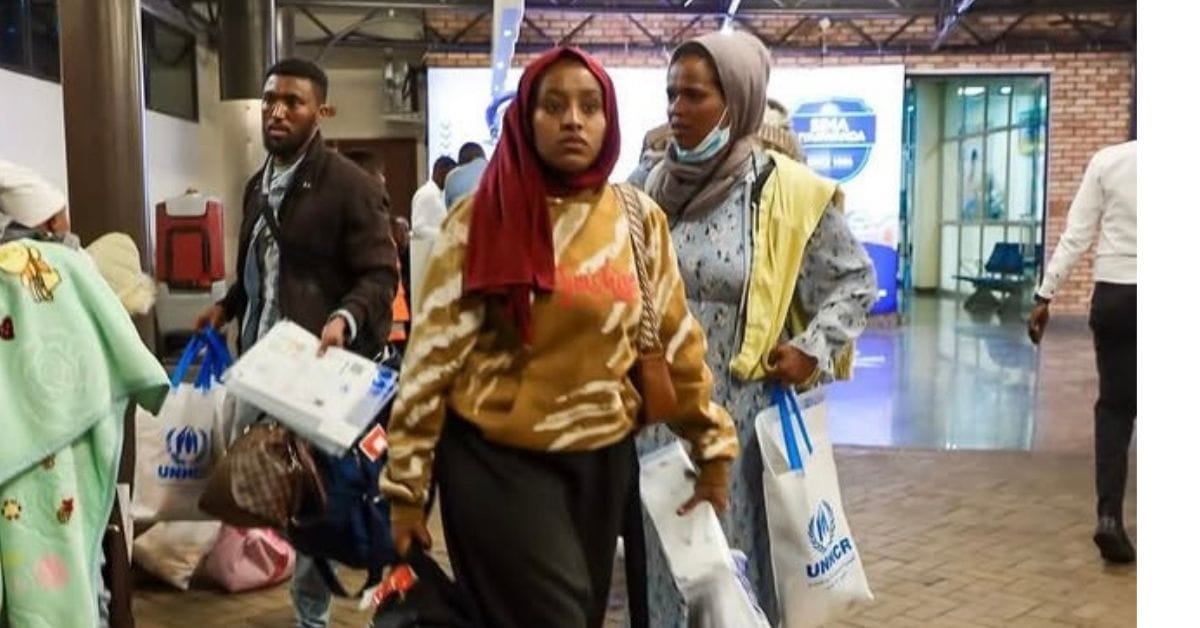
But for kidnapping victim Naima Jamal, things are improving. Thanks to the advocacy and online attention driven by groups including Refugees in Libya, funds for her release were secured. David Yambio admits paying off captors is not an ideal way to resolve the situation but understands Naima’s family’s need to see her freed. And just last week, she was issued an emergency order from UNCHR and evacuated with 137 others victims to Rwanda. It may take her years to recover from her ordeal, but for now, she's safe.
Raising migrants voices
Here in Europe, Yambio is continually raising his voice for the migrants cause; challenging Italy's proposed, harsher, citizenship laws (aimed at hitting refugees the hardest), testifying on human rights issues at the European Parliament, and speaking to crowds of over-500 strong students on the treacherous journey migrants face when crossing the mediterranean.
Girl X
I ask Yambio about another victim who’s plight I would've also liked to share. A 16yr old girl, who this time, was duped by traffickers into believing she was travelled to Dubai for work but, instead, was taken to Libya where she was sexually abused and tortured. Her ransom video was later shared publicly, to try and leverage her release.
Yambio shows me the girl's investigation form. Despite their limited funds and people-power, Refugees in Libya collect and document as much evidence and information as they can to best help their victims. He informs me that following eight months of torture, the girl’s captors understood that no one was coming forward to pay her ransom. Scarred but alive, they released her onto the streets of Libya.
In expressing my relief, I reveal my naivety to the reality of the situation there. David claims that the kidnapped and tortured teenager was refused entry to the UNCHR building in Tripoli. She was left alone in a foreign country, traumatised and with no way to fend for herself . And it's also why David Yambio asks me to withhold the girl's identity, until she's safe. In his experience, 90% of young girls like this are recaptured and tortured again. A continuous cycle.
But that’s not a signal for Yambio to give up. His drive for migrant liberation seems insatiable. I learn that a community network over in Libya was mobilised for the vulnerable teenage, rallying support, food and shelter, a lifeline from those who have so little themselves.
It seems trite to talk about spirit here, but what else have these migrants been left with? Many had their childhoods stolen from them, they've left behind their war-torn countries, their loved ones, the right to identity, stripped of their freedom, dignity and even their bodily autonomy. For too many this sacrifice cost their lives. Yet those that do survive, despite being forced to their knees, just keep standing back up.
The least we can do is fight our end for the safety and freedoms they so deserve.
For more details on how to support Refugees in Libya, click here.
